_edited.png)
When to Change Locks After a Break In at Home

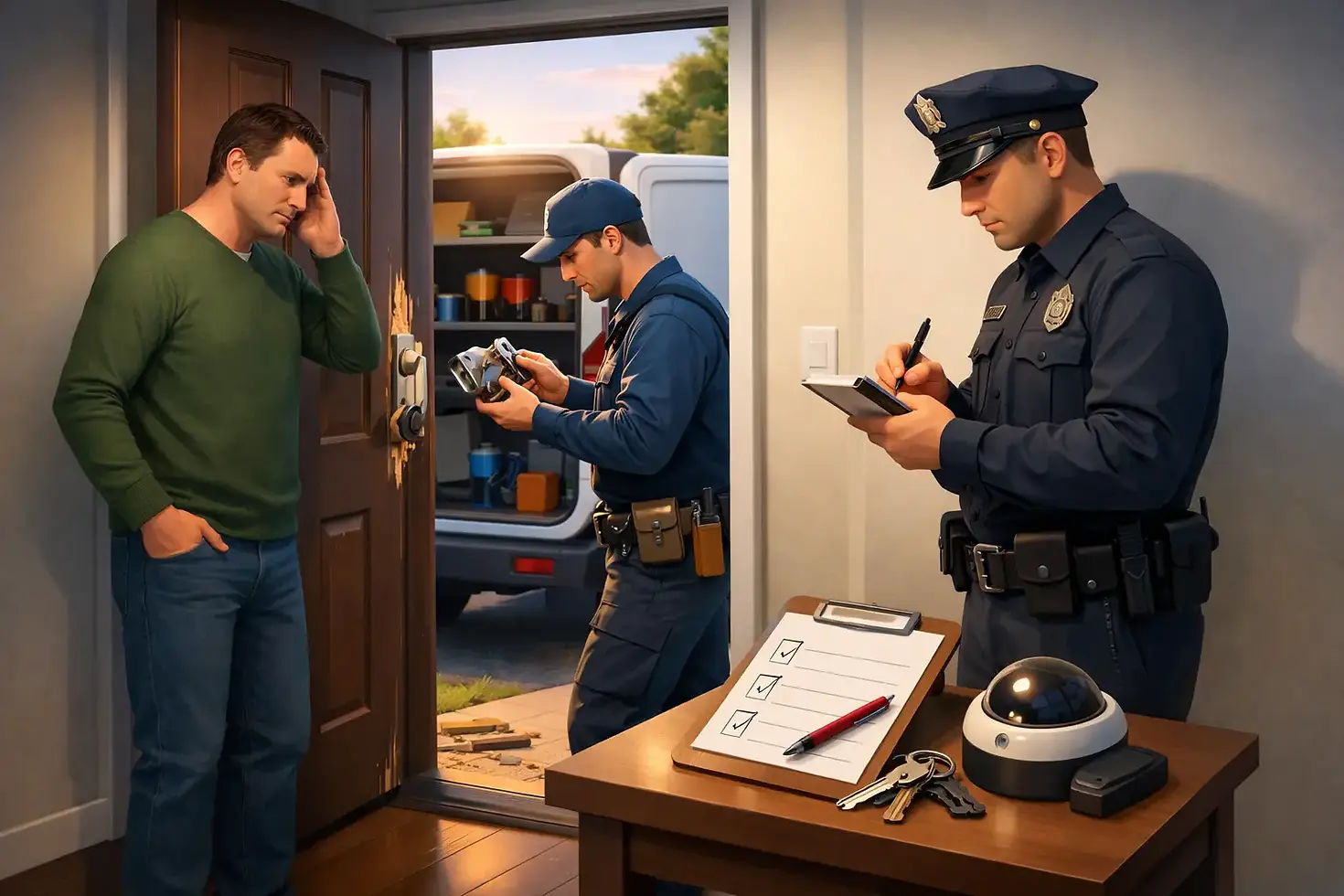
A broken door frame gets your attention. A missing key is easier to overlook, but it can create the same problem. The decision to change locks after break in damage, stolen keys, or unauthorized entry should happen quickly, before your home or business is left exposed a second time.
For homeowners, property managers, and business owners across the Florida Panhandle, a break-in is more than an inconvenience. It disrupts your sense of safety and raises practical questions: Did the intruder get a key? Is the deadbolt still secure? Should every lock be replaced, or is rekeying enough? The right answer depends on what happened at the property and the condition of the hardware.
Change Locks After Break In: Start With the Door Itself
Before replacing any lock, look closely at the entire entry point. A lock can appear to work while the surrounding door, frame, strike plate, or hinges have been weakened. If the deadbolt no longer lines up smoothly, the door has splintered wood around the latch, or the strike plate screws pulled loose, simply installing a new lock may not solve the security issue.
After law enforcement has documented the scene, check the doors, windows, garage entry, sliding doors, and any side gates. Do not clean or repair areas that may still be needed as evidence until you have been cleared to do so. Take photos of visible damage for your insurance claim, including damaged hardware, frame repairs, and missing items.
A forced-entry door often needs two kinds of work: security hardware replacement and structural repair. A quality deadbolt is only as strong as the frame it locks into. Longer screws secured into solid framing, a reinforced strike plate, and proper door alignment can make a meaningful difference.
When Rekeying Is Enough and When It Is Not
Rekeying changes the internal pins inside an existing lock so the old key no longer works. It is usually a practical, affordable option when the lock is in good working condition but a key may be missing, copied, or in the wrong hands.
For example, rekeying may make sense if a burglar entered through an unlocked window, but your exterior lock hardware was not damaged. It is also a smart move if house keys were stolen from a purse, vehicle, lockbox, or office. Even if the keys do not have your address attached, it is safer to assume they could be traced back to your property.
Replacing the lock is the better choice when the lock has been drilled, pried, kicked, bent, or otherwise damaged. Replacement is also worth considering if your current locks are low-grade, worn out, or use a keyway that has been shared with former tenants, employees, contractors, or neighbors for years.
There is a trade-off. Rekeying can save money and preserve matching hardware, while replacement gives you the chance to improve security and update the look of the door. A professional locksmith can inspect the hardware on-site and recommend the option that makes sense without selling you more than the property needs.
Replace Damaged Hardware Immediately
A damaged lock can fail without warning. Even if it turns today, internal parts may be cracked or misaligned after an attempted break-in. Do not rely on a temporary repair for an exterior door, especially overnight.
Deadbolts should extend fully into the strike plate without forcing the door up, down, or inward. If you have to push hard on the door to lock it, there may be a frame or alignment issue that needs attention. In coastal Florida communities, moisture, salt air, and seasonal movement can also affect exterior hardware over time.
Rekey Every Door That Uses the Same Key
If one stolen or missing key opened multiple doors, rekey all locks on that key system. That may include the front door, back door, garage service door, shed, storage room, mailbox, and office entry.
For a rental property, it is wise to rekey after a break-in even if the keys were not reported missing. You may not know how many copies have been made over the years. New tenants deserve a clean key system, and property owners need clear control over who has access.
Do Not Forget the Less Obvious Entry Points
Most people focus on the front door first. That is understandable, but burglars often choose the least visible entry point. Walk the property with a security mindset and look for doors or windows that are easy to reach without being seen.
Pay attention to sliding glass doors, garage side doors, rear patio entries, pool gates, and doors connecting an attached garage to the house. A sliding door may need more than a functioning latch. A properly fitted security bar or secondary lock can help prevent the panel from being forced open or lifted from its track.
For businesses, inspect employee entrances, rear delivery doors, storage areas, and offices with sensitive records or inventory. If keys were taken during the incident, consider whether they also opened filing cabinets, equipment rooms, cash areas, or supply cages. One compromised key can affect far more than one door.
Improve Security Without Overcomplicating It
A break-in can lead people to buy every security product available. Some improvements are worthwhile, but the best upgrades are the ones that address the actual weakness.
If the issue was a weak deadbolt, improve the lock and strike plate. If a former employee may still have a key, rekey or replace the lock and establish better key control. If the property has several people coming and going, keyless entry or a code lock may reduce the risk of untracked key copies.
For commercial properties, access control can be a better long-term answer than repeatedly collecting keys from staff. Codes and credentials can be changed when an employee leaves, and access can be limited to certain doors or hours. That is not necessary for every small business, but it can be a practical upgrade for offices, vacation rentals, retail spaces, and properties with frequent turnover.
At home, consider whether a smart lock fits your routine. It can be convenient for families, guests, or service providers, but it should be installed on a solid door with a secure frame. Technology is not a substitute for sound mechanical security.
Steps to Take in the First 24 Hours
Once the scene is cleared, move in a clear order. This helps prevent a stressful situation from turning into a rushed decision.
Contact law enforcement and keep the case number for your records and insurance claim.
Photograph damage and make a list of stolen keys, devices, documents, and valuables.
Secure the damaged opening with a temporary repair if needed, then arrange permanent lock and door repairs.
Rekey or replace affected locks before returning to normal routines.
Change garage codes, alarm codes, gate codes, and Wi-Fi passwords if information or devices were taken.
Notify your property manager, landlord, insurer, or business partners when their access or responsibilities may be affected.
If identification documents, mail, checkbooks, or key fobs were stolen, treat that as a broader security concern. Cancel access credentials, monitor accounts, and update codes that may be connected to the property.
Get Help Before the Property Is Left Vulnerable
A break-in rarely happens at a convenient time. If your lock is damaged late at night, you should not have to wait until morning with a door that will not secure. A mobile locksmith can come to the property, assess the hardware, rekey locks that are still serviceable, and replace compromised locks on-site.
Xpress Locksmith provides mobile locksmith service for residential and commercial customers throughout Okaloosa, Walton, Santa Rosa, and Bay Counties. When choosing help after a break-in, look for a licensed, bonded, and insured locksmith who can explain the work clearly and give you a practical option for your budget.
The goal is not to turn your property into a fortress overnight. It is to restore control: secure the opening, remove old key access, fix the weak point, and let your home or business feel like yours again.


Comments