_edited.png)
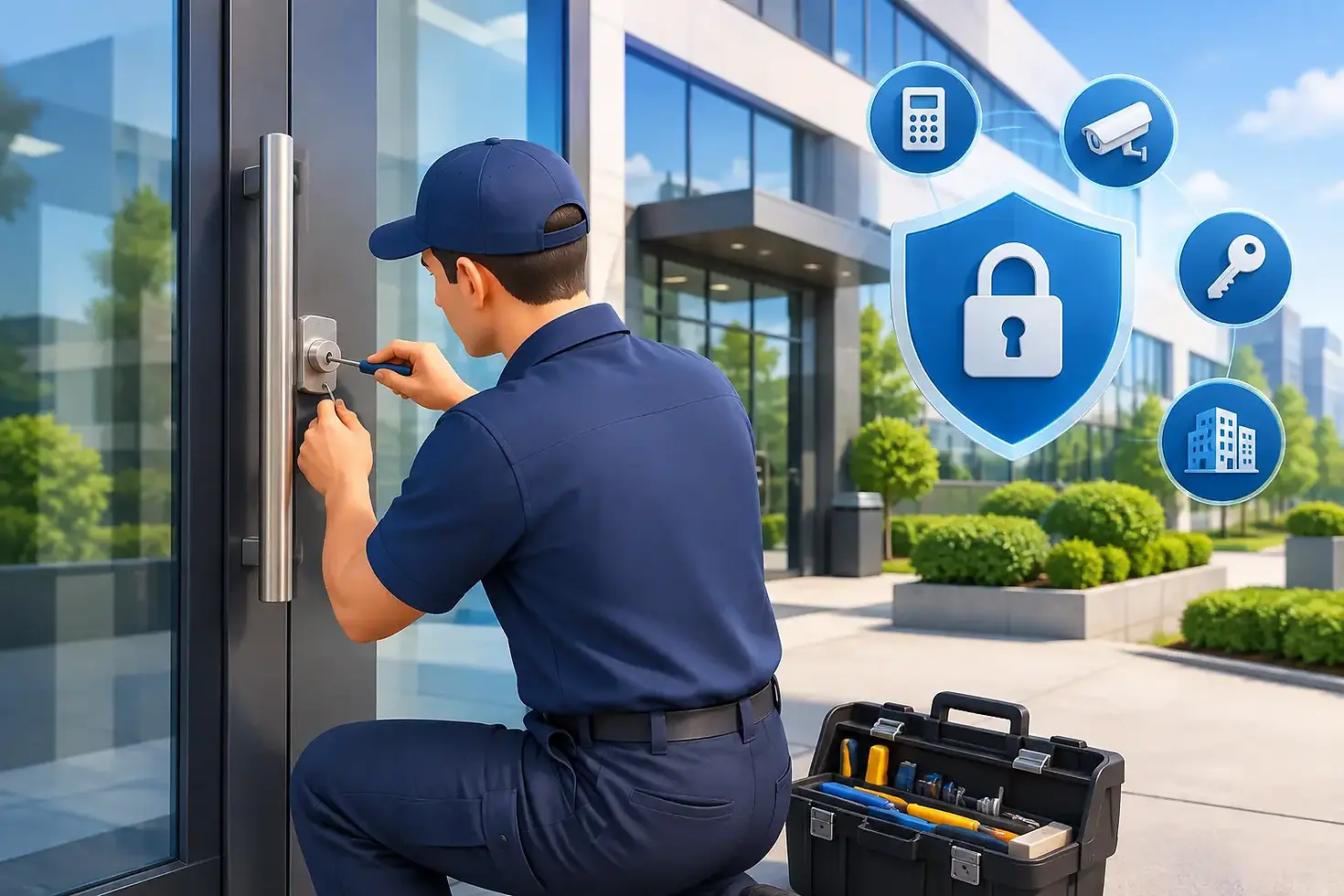
Commercial Locksmith Services That Protect Business

A missing key, a former employee who still has access, or a back door that will not latch can disrupt far more than a workday. A commercial locksmith helps business owners, property managers, and facility teams handle those problems on-site, with practical security solutions that fit the building, the staff, and the budget.
For Florida Panhandle businesses, physical security has to work under real conditions: busy seasonal traffic, employee turnover, rental turnover, coastal weather, and doors that are opened hundreds of times a day. The right solution is rarely the most complicated one. It is the one that reliably controls access without slowing down the people who need to do their jobs.
When to Call a Commercial Locksmith
Some calls are urgent. A key breaks in the lock before opening, a manager cannot get into the office, or a damaged lock leaves a door unsecured after closing. In those moments, the priority is to restore access or secure the entry without causing unnecessary damage to the door, frame, or hardware.
Other calls are preventive, and they are often the calls that save money later. If an employee leaves with a key, a tenant moves out, or keys have been passed around without a clear record, it may be time to rekey or change the locks. Rekeying changes the internal configuration of a compatible lock so old keys no longer work. It is usually more cost-effective than replacing working hardware. Lock replacement makes more sense when the hardware is worn out, damaged, incompatible with the desired key system, or no longer provides the level of security the property needs.
A commercial locksmith can also help when the problem is not the lock itself. A door that slams, drags, sticks, or fails to close completely can become a security issue. If the latch does not fully engage, the door may look closed while remaining vulnerable to being pushed open. Door closers, hinges, strikes, panic hardware, and frames all affect whether an entry actually secures as intended.
Start With the Door and the Daily Routine
Every business has different access needs. A small office with two employees should not be set up exactly like a restaurant with multiple shifts, a vacation rental office, a medical practice, or a warehouse with delivery entrances. Before choosing hardware, consider who needs access, when they need it, and what happens when their role changes.
A front entry used by customers needs dependable hardware that stands up to frequent use. A stockroom or records room may need restricted access. Exterior doors may need stronger protection from weather and forced entry, while interior doors may benefit from a simpler key system. The goal is not to put the same lock on every door. It is to assign the right level of control to each opening.
Key control deserves special attention. Many businesses begin with a few keys and a simple routine, then gradually lose track as staff changes. Keys get copied, borrowed, or left with vendors. Eventually, no one can say with confidence how many keys are in circulation.
A restricted keyway or organized master key system can bring order back to that process. With a master key system, authorized managers can access multiple areas while employees receive keys limited to the spaces they need. This can be useful, but it requires planning. A poorly designed master system can create too much access or become difficult to manage over time. Keep a current record of issued keys, collect keys promptly when employment ends, and review access after a management or occupancy change.
Rekeying, Replacing, or Upgrading
Rekeying is a smart choice after lost keys, staff turnover, tenant turnover, or a change in who is trusted with access. It preserves functional hardware and gives the property a fresh key combination. For a business with several doors, rekeying can also make it possible to reduce a heavy key ring into a more organized system.
Replacing locks is appropriate when there are signs of wear, attempted damage, rust, loose cylinders, inconsistent latching, or outdated hardware. Florida humidity and salt air near the coast can be hard on exterior hardware. A lock that works only after several tries is not a small inconvenience. It is an early warning that the door could fail at the worst possible time.
An upgrade may involve high-security cylinders, keypad locks, electronic access control, or better door hardware. The best choice depends on the property. Electronic access can reduce the problem of unreturned keys and allow credentials to be removed without rekeying a door. On the other hand, electronic systems require reliable installation, power or battery management, and clear procedures for staff. A mechanical lock may be the better fit for a low-traffic door where simplicity matters most.
Access Control Without Making Work Harder
Keyless entry and access control systems are useful when a business needs more visibility and flexibility than traditional keys provide. A code, card, fob, or mobile credential can be assigned to a specific person and removed when access should end. Depending on the system, managers may also set schedules so certain doors are available only during approved hours.
This is especially valuable for businesses with rotating employees, multiple locations, cleaning crews, vendors, or restricted areas. Instead of changing locks every time staffing changes, an authorized manager can change a code or deactivate a credential. That is a practical advantage, not just a technology upgrade.
Still, access control should match the way people actually enter the building. A system that is difficult for staff to use will lead to doors being propped open, codes being shared, or security steps being ignored. Choose clear procedures, limit who can administer credentials, and keep an emergency override plan. If the internet or power goes out, the business should know who can enter and how the doors will operate.
Do Not Ignore Door Closers and Exit Hardware
Locks get attention, but the door closer often determines whether a commercial entry is secure. A closer should bring the door shut at a controlled speed and allow the latch to engage firmly. If it closes too fast, it can be unsafe and frustrating for customers. If it closes too slowly or stops short, the door may remain unlatched.
Panic bars and other exit devices also need regular attention. These devices are designed for safe, quick exit and must operate freely. Adding or changing exterior security hardware should never interfere with safe egress. Commercial buildings may have fire, accessibility, or local code requirements that affect which hardware is appropriate. A professional assessment can prevent an expensive mistake, particularly when a door serves the public or is part of a required exit route.
What to Expect From a Mobile Locksmith Visit
A qualified mobile locksmith should assess the door, lock, frame, and intended use before recommending work. The conversation should be straightforward: what happened, who needs access, which doors are affected, and whether the priority is an immediate repair or a long-term security improvement.
For emergency service, the first objective is often to regain entry or secure the opening quickly. For planned work, it is worth walking through all relevant doors at once. A property manager may discover that several doors use different keyways, that a rear entry has failing hardware, or that an old office key still opens a storage area. Addressing those issues in one coordinated visit can be more efficient than dealing with them one at a time.
Ask for clear pricing before work begins, especially when the scope may change after inspection. You should also expect professional identification, careful work around the door and frame, and an explanation of any new keys, codes, or access procedures. For businesses, licensed, bonded, and insured service is more than a trust signal. It is basic protection for the property and the people responsible for it.
Build a Security Plan Before the Next Emergency
A good commercial security plan does not need to be complicated. Start by identifying every exterior door, interior restricted area, keyholder, and access credential. Then decide who has authority to issue keys, change codes, approve rekeying, and call for emergency service. This keeps a stressful situation from turning into a chain of unanswered questions.
Review the plan after a break-in, lost key, employee departure, lease change, or renovation. Also pay attention to small warning signs: a key that sticks, a loose lever, a closer that leaks oil, or a door that needs to be pulled hard before it latches. Small repairs are usually simpler than an after-hours failure.
For businesses in Niceville, Destin, Fort Walton Beach, Crestview, and surrounding Panhandle communities, local mobile support matters when a door problem cannot wait. Xpress Locksmith can help with urgent lock issues as well as planned rekeying, keyless entry, door closer, and access control work.
Your doors should support the way your business runs, not become another daily risk to manage. A quick review of keys, hardware, and access rules now can make the next busy morning far less stressful.


Great article! I especially like the focus on rekeying locks after employee departures or lost keys. These situations can easily create security gaps if businesses do not take action promptly. A well-organized access system helps protect valuable equipment, documents, and inventory. This information is useful for companies considering Commercial Locksmith Miami Beach services for their properties.